English
 Español
 Français
 lingua italiana
 Deutsch
 العربية
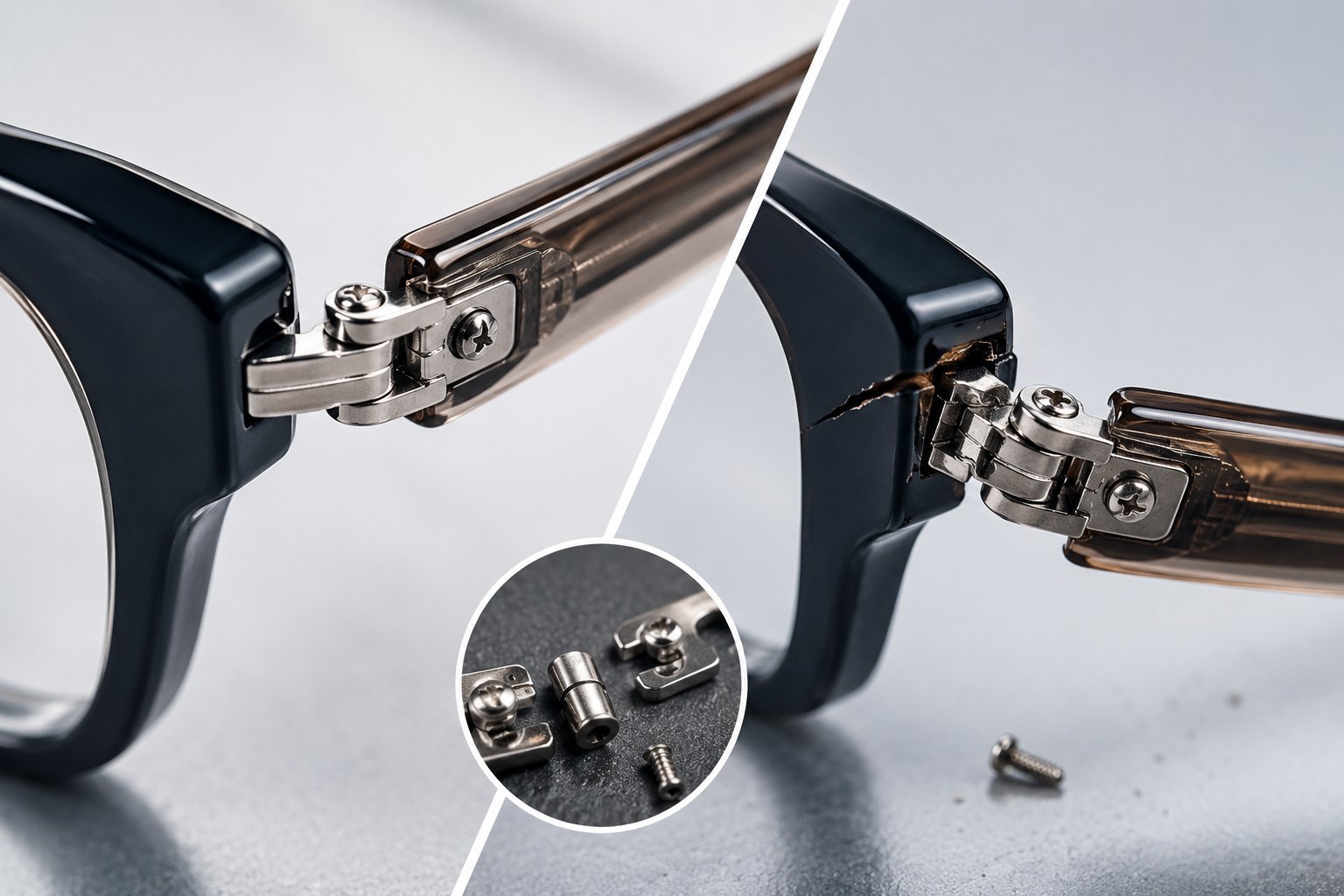
Eyeglass hinges are among the most frequently used components of any frame. Every time a user opens or closes their glasses, the hinges experience stress and movement. While a well-made hinge can withstand years of daily use, poorly designed or poorly manufactured hinges may fail much sooner.
For eyewear brands, wholesalers, and retailers, understanding why some eyeglass hinges break easily can help reduce customer complaints, warranty claims, and product returns.
This guide explains the most common causes of hinge failure, how manufacturers test hinge durability, and what buyers should look for when sourcing quality eyewear.
Quick Answer: Why Do Some Eyeglass Hinges Break Easily?
Eyeglass hinges typically break because of:
In many cases, hinge failure is not caused by the hinge itself but by weaknesses in the overall frame construction.
What Is the Function of an Eyeglass Hinge?
The hinge connects the front frame to the temples and allows the temples to fold smoothly.
A quality hinge should:
Because hinges are moving parts, they are naturally one of the highest-wear areas of any eyewear frame.
1. Low-Quality Hinge Materials
One of the most common reasons hinges fail is the use of low-grade materials.
Cheap hinges may be made from softer metals that are more prone to:
Premium eyewear manufacturers typically use:
Higher-quality materials provide better long-term durability and reliability.
2. Weak Rivet Installation
For acetate frames, hinge strength depends heavily on how the hinge is attached to the frame.
Poor rivet installation can cause:
Properly installed rivets distribute stress more evenly and significantly improve frame lifespan.
3. Poor Welding or Soldering
Metal frames often rely on welding or soldering to secure hinge components.
If the welding process is not properly controlled, weak points can develop around the hinge area.
Common issues include:
These defects may not be visible during visual inspection but can lead to premature hinge failure after repeated use.
4. Excessive Stress During Daily Use
Even a well-made hinge can fail if subjected to excessive force.
Common causes include:
Over time, repeated stress can loosen screws, deform hinge components, or create metal fatigue.
5. Low-Quality Spring Hinges
Spring hinges are popular because they improve comfort and flexibility.
However, poorly manufactured spring hinges can create additional problems:
A spring hinge is only as reliable as the quality of its internal components.
6. Corrosion and Environmental Exposure
Sweat, humidity, cosmetics, and cleaning chemicals can gradually weaken hinge materials.
Corrosion is especially common in:
Corrosion may weaken screws, springs, and hinge plates, eventually causing breakage.
Manufacturers often use corrosion-resistant materials and protective surface treatments to reduce this risk.
7. Insufficient Quality Control
Many hinge failures originate during production rather than during consumer use.
Without proper quality control, defects may go unnoticed, including:
Consistent inspection procedures help identify these issues before products reach the market.
How Do Professional Manufacturers Test Hinge Durability?
Reliable eyewear manufacturers perform durability testing before shipment.
Common tests include:
Opening and Closing Cycle Testing
Frames are repeatedly opened and closed to simulate years of use.
Hinge Alignment Inspection
Technicians verify that both temples open and close smoothly without distortion.
Pull Strength Testing
Additional force is applied to ensure hinges remain securely attached to the frame.
Screw Retention Testing
Manufacturers evaluate whether screws maintain proper tension over time.
These tests help identify weaknesses before products reach customers.
What Should Eyewear Buyers Look For?
When evaluating eyewear samples, buyers should pay close attention to the hinge area.
Ask the following questions:
The answers can reveal a great deal about the overall quality of the product.
How Searay Optical Ensures Hinge Durability
At Searay Optical, hinge durability is treated as a critical part of frame quality.
During production, frames undergo multiple inspection stages covering:
For acetate and metal eyewear collections, durable hinge systems and strict quality control procedures help ensure reliable performance in daily use.
By combining experienced craftsmanship with comprehensive quality inspections, Searay Optical aims to reduce common hinge-related issues and provide dependable eyewear solutions for wholesalers, retailers, and private label brands.
Frequently Asked Questions
Are spring hinges stronger than regular hinges?
Not necessarily. High-quality spring hinges can improve flexibility and comfort, but poorly manufactured spring hinges may fail faster than standard hinges.
How long should eyeglass hinges last?
A well-made hinge can withstand years of daily use and thousands of opening and closing cycles when properly maintained.
Can broken hinges be repaired?
In many cases, loose screws or minor hinge issues can be repaired. However, cracked hinge plates or severe structural damage may require frame replacement.
What frame material provides the strongest hinge connection?
Both premium acetate and high-quality metal frames can provide excellent hinge durability when combined with proper manufacturing techniques and quality components.
Conclusion
Eyeglass hinges usually break because of material quality issues, poor installation methods, weak manufacturing processes, excessive stress, or inadequate quality control. While hinge failure is a common complaint in lower-quality eyewear, it can often be prevented through better engineering, stronger materials, and thorough testing.
For eyewear brands, distributors, and retailers, evaluating hinge construction should be an essential part of supplier selection. A durable hinge not only improves product longevity but also enhances customer satisfaction and reduces costly returns.