English
 Español
 Français
 lingua italiana
 Deutsch
 العربية
When sourcing sunglasses or optical eyewear, many B2B buyers often ask the same question: What is the difference between polarized lenses and UV400 lenses?
Although these two terms are commonly used together in the eyewear industry, they are not the same thing. Understanding the difference is important for wholesalers, distributors, retailers, and private label eyewear brands that want to select the right products for their target markets.
In this guide, we will explain how polarized lenses and UV400 lenses work, their benefits, key differences, and how to choose the right option for your eyewear business.
What Are UV400 Lenses?
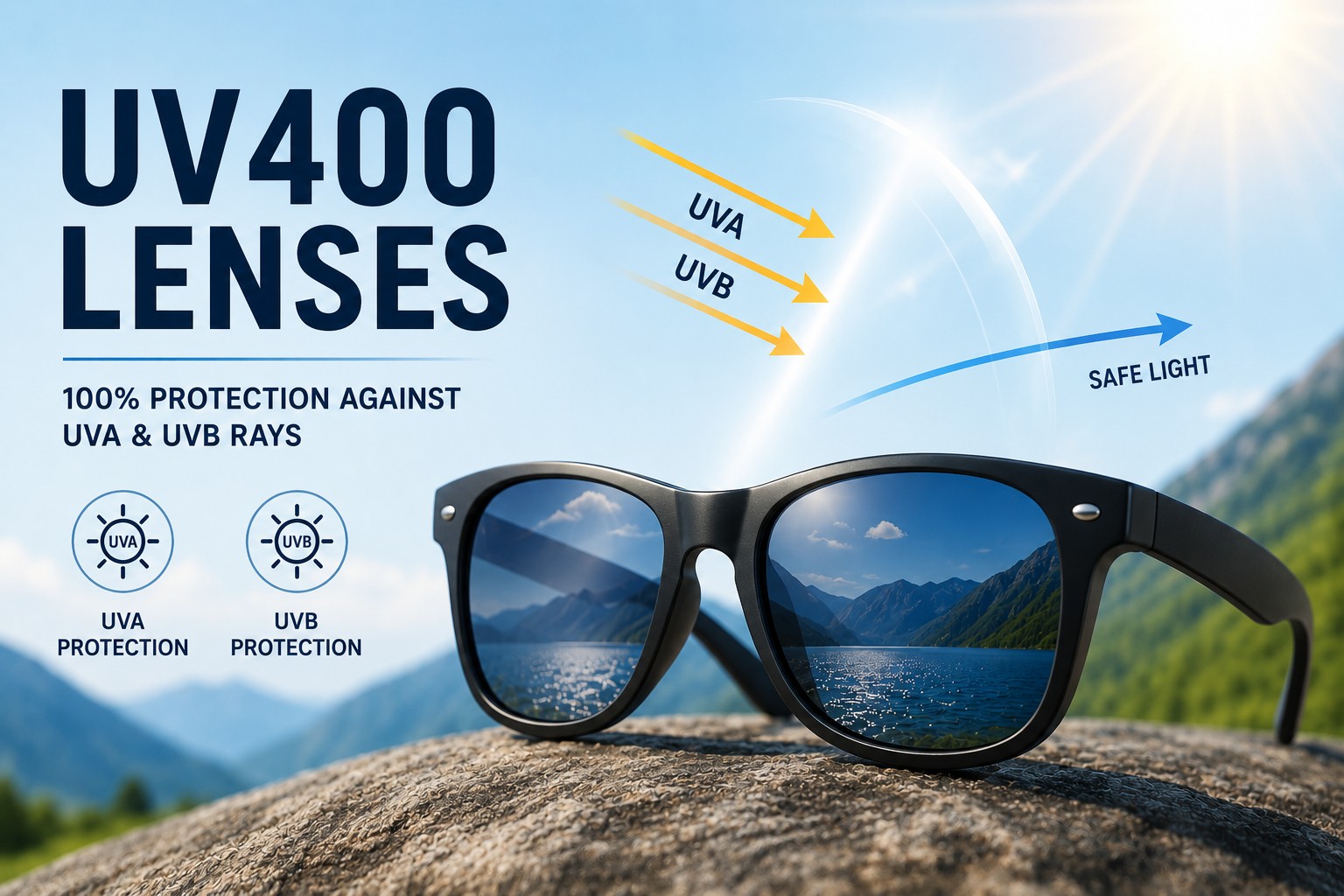
UV400 lenses are designed to block harmful ultraviolet (UV) rays from the sun. Specifically, they block UVA and UVB rays with wavelengths up to 400 nanometers.
This level of protection is considered the highest standard for UV protection in eyewear.
Why UV Protection Matters
Long-term exposure to UV rays may contribute to eye problems such as:
- Cataracts
- Macular degeneration
- Photokeratitis
- Eye strain and discomfort
For this reason, UV protection is one of the most important features consumers look for when buying sunglasses.
How UV400 Lenses Work
UV400 lenses contain special coatings or materials that absorb or reflect ultraviolet radiation before it reaches the eyes.
It is important to understand that UV protection is invisible. A lens can look clear or dark while still offering UV400 protection.
Common Applications of UV400 Lenses
UV400 lenses are widely used in:
- Fashion sunglasses
- Sports eyewear
- Safety glasses
- Optical clip-ons
- Kids’ sunglasses
- Outdoor lifestyle eyewear
Today, many importers and retailers consider UV400 protection a basic requirement rather than a premium feature.
What Are Polarized Lenses?
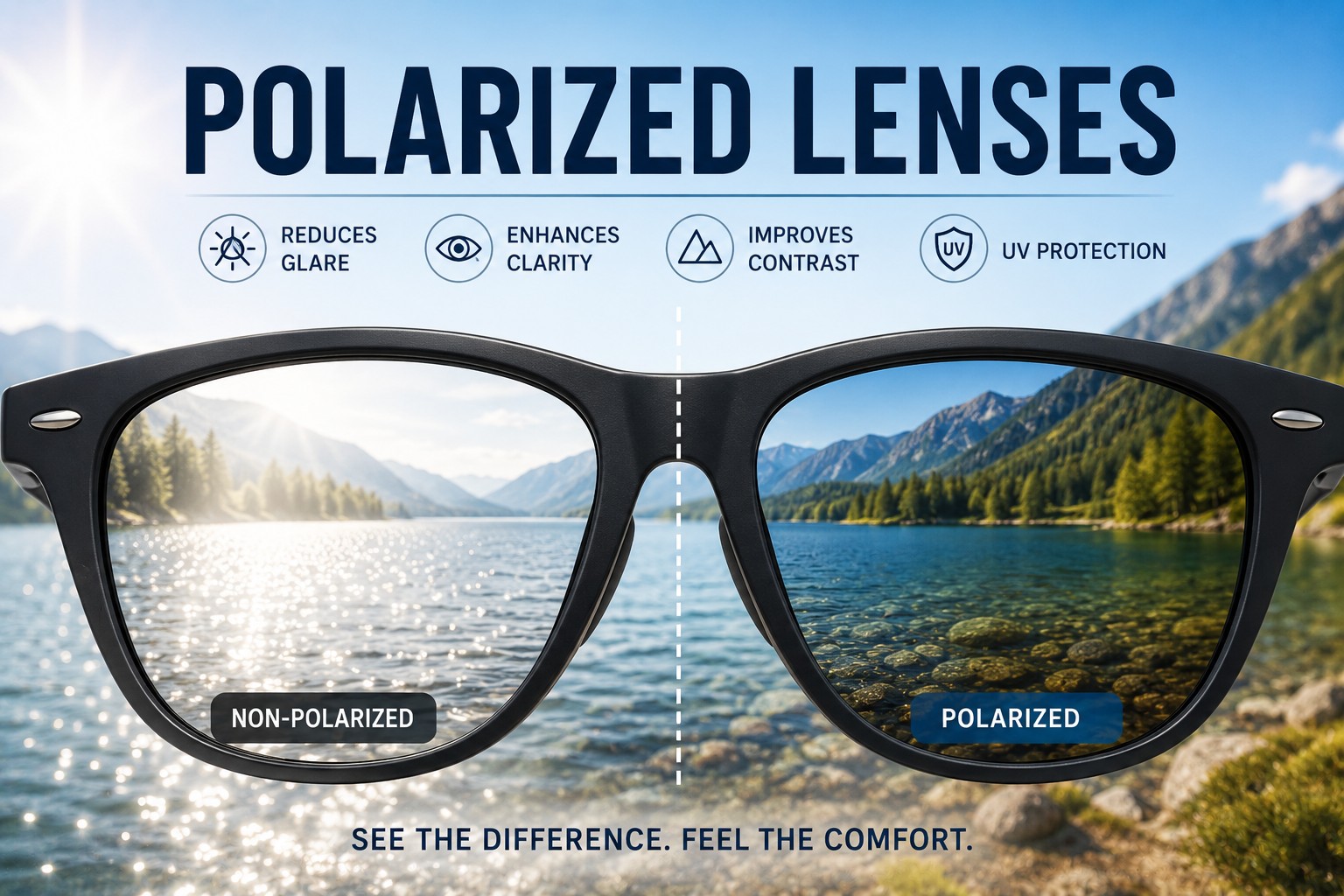
Polarized lenses are designed to reduce glare caused by reflected light.
Glare commonly occurs when sunlight reflects off flat surfaces such as:
- Water
- Roads
- Snow
- Car hoods
- Glass buildings
This reflected light creates intense brightness that can reduce visibility and cause eye fatigue.
How Polarized Lenses Work
Polarized lenses contain a special chemical filter that blocks horizontally reflected light.
This filter allows normal vertical light to pass through while reducing glare.
As a result, users experience:
- Clearer vision
- Better contrast
- Reduced eye strain
- Improved visual comfort outdoors
Common Applications of Polarized Lenses
Polarized lenses are especially popular for:
- Fishing sunglasses
- Driving eyewear
- Outdoor sports
- Hiking and cycling
- Beachwear
- Premium sunglasses collections
In many markets, polarized sunglasses are considered a higher-value product with stronger retail margins.
Polarized vs UV400: Key Differences
Although both technologies improve eye comfort and protection, they serve different purposes.
UV400 Protects Eyes from Invisible UV Rays
UV400 lenses focus on health protection by blocking ultraviolet radiation.
Their main purpose is to reduce long-term UV damage to the eyes.
Polarized Lenses Reduce Visible Glare
Polarized lenses focus on visual comfort and clarity by reducing glare from reflected light.
Their main purpose is improving outdoor vision.
A Lens Can Have Both Features
This is where many buyers become confused.
Polarization and UV400 are not competing technologies. In fact, many high-quality sunglasses include both features.
For example:
- A polarized lens may also include UV400 protection.
- A UV400 lens may not necessarily be polarized.
For premium eyewear collections, combining both features is often the best solution.
Comparison Table: Polarized vs UV400 Lenses
| Feature | UV400 Lenses | Polarized Lenses |
|---|---|---|
| Main Function | Block UV rays | Reduce glare |
| Eye Protection | Yes | Partial |
| Improve Visual Comfort | Limited | Excellent |
| Reduce Reflections | No | Yes |
| Ideal for Outdoor Use | Yes | Yes |
| Suitable for Driving | Basic | Excellent |
| Suitable for Water Sports | Basic | Excellent |
| Cost Level | Lower | Higher |
| Consumer Perceived Value | Standard | Premium |
Which Lens Type Should B2B Buyers Choose?
The answer depends on your target market, pricing strategy, and customer needs.
Choose UV400 Lenses If:
- You focus on budget-friendly sunglasses
- Your customers prioritize basic eye protection
- You sell fashion eyewear at entry-level prices
- You need competitive wholesale pricing
- Your market requires certified UV protection
UV400 lenses are now standard in many countries, especially in Europe and North America.
For wholesalers, offering UV400 protection helps meet market expectations while keeping costs manageable.
Choose Polarized Lenses If:
- You target outdoor or sports consumers
- You want higher retail margins
- Your customers value driving comfort
- You sell premium sunglasses
- You want stronger product differentiation
Polarized sunglasses usually have higher perceived value, allowing retailers to increase selling prices.
Many premium eyewear brands use polarization as a key selling point.
Are Polarized Lenses Better Than UV400?
Not necessarily.
These two technologies solve different problems.
A polarized lens without UV protection may still expose eyes to harmful UV rays.
Similarly, a UV400 lens without polarization may protect the eyes but still allow uncomfortable glare.
For the best user experience, many professional eyewear manufacturers combine both technologies into one lens.
This creates sunglasses that offer:
- UV protection
- Glare reduction
- Better visual clarity
- Improved outdoor comfort
Important Considerations When Sourcing Eyewear
For B2B buyers, understanding lens quality is critical when selecting an eyewear manufacturer.
Verify UV Protection Certifications
Always ask suppliers about:
- UV400 testing standards
- CE certification
- FDA compliance
- Lens material specifications
Reliable manufacturers should provide testing reports or compliance documentation.
Check Polarization Quality
Not all polarized lenses perform equally.
Low-quality polarization films may cause:
- Visual distortion
- Reduced durability
- Peeling or bubbling
- Inconsistent glare reduction
Ask suppliers about:
- TAC polarized lenses
- Nylon polarized lenses
- Lens coating technology
- Scratch resistance
Understand Your Market Positioning
Before placing orders, define your target customer:
Entry-Level Market
Focus on:
- Affordable UV400 sunglasses
- Fashion-oriented styles
- Large-volume sales
Mid-to-Premium Market
Focus on:
- Polarized UV400 sunglasses
- Better lens materials
- Enhanced packaging
- Outdoor functionality
Trends in the Global Eyewear Market
Consumer awareness about eye protection continues to increase globally.
Several current trends include:
Growing Demand for Polarized Sunglasses
Outdoor lifestyles and driving-related eyewear are driving demand for polarized lenses.
Polarized products are especially popular in:
- North America
- Australia
- Coastal markets
- Sports-oriented retail channels
UV Protection Becoming Standard
Many consumers now expect UV400 protection as a basic feature rather than a premium upgrade.
Retailers that fail to offer UV protection may face lower customer trust.
Demand for Multifunctional Eyewear
Modern consumers increasingly prefer sunglasses that combine:
- UV400 protection
- Polarization
- Blue light filtering
- Lightweight materials
- Scratch-resistant coatings
This trend creates opportunities for eyewear brands to offer value-added products.
How Manufacturers Can Help Buyers Choose the Right Lenses
Experienced eyewear manufacturers can support buyers by offering:
- Lens customization options
- Polarization upgrades
- OEM and private label services
- Material recommendations
- Market-focused product suggestions
A professional supplier should also help buyers balance:
- Cost
- Performance
- Product positioning
- Compliance requirements
This is especially important for importers building long-term eyewear brands.
Conclusion
Polarized lenses and UV400 lenses are both important features in modern eyewear, but they serve different purposes.
- UV400 lenses protect the eyes from harmful ultraviolet rays.
- Polarized lenses reduce glare and improve visual comfort.
For many B2B buyers, the best solution is to source eyewear that combines both technologies.
When selecting an eyewear manufacturer, focus not only on pricing but also on lens quality, certification, and product consistency. High-quality lenses improve customer satisfaction, strengthen brand reputation, and increase repeat orders.
If you are looking for a reliable eyewear manufacturing partner for polarized or UV400 sunglasses, working with an experienced supplier can help you develop competitive products for your market.
Ready to Source High-Quality Eyewear?
Whether you need polarized sunglasses, UV400 fashion eyewear, or private label collections, choosing the right manufacturing partner is essential for long-term business success.
Work with an experienced eyewear supplier that offers reliable quality control, flexible MOQ options, and professional OEM/ODM services to help grow your brand in competitive global markets.
Contact us today!